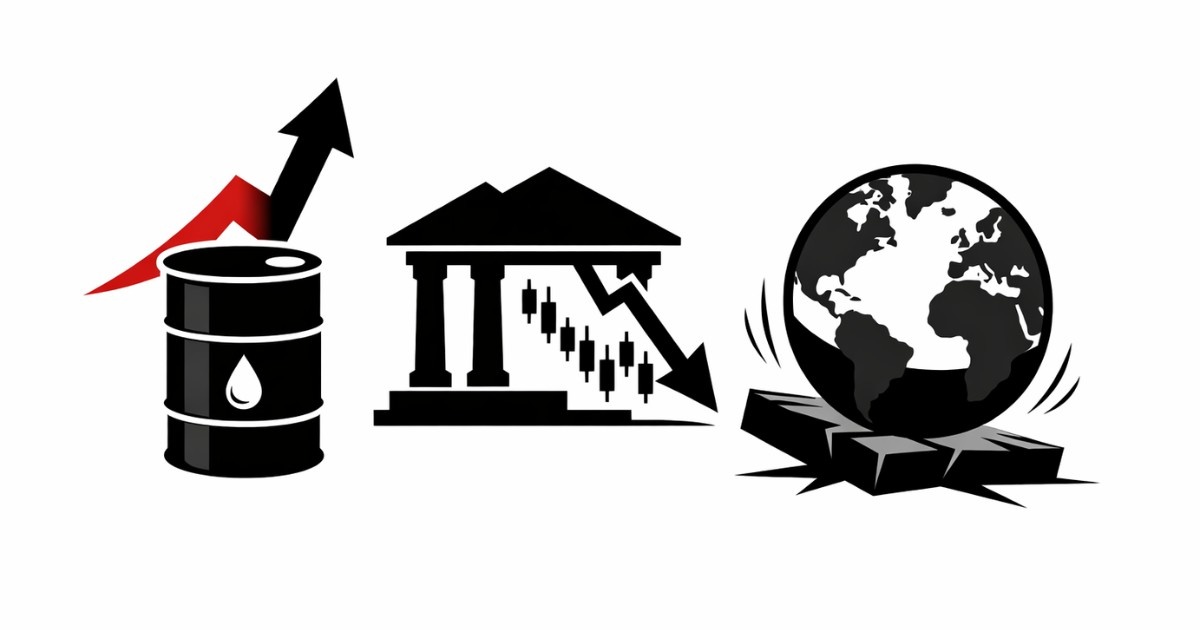
Global Market Shockwaves Today: Oil Prices Jump, Banking Stocks Swing, and Risk Sentiment Turns Volatile
Global markets are seeing fresh volatility today as oil prices move sharply, banking stocks react to new developments, and overall risk sentiment remains fragile.
For Indian investors, this is not distant news.
India imports a large share of its crude oil needs. Global banking stress can affect capital flows. Changes in risk appetite influence the stock market, rupee movement, and bond yields.
When oil prices rise or fall quickly, or when global banks face pressure, Indian markets usually respond within hours.
Today’s global market shockwaves are being closely tracked by traders, policy watchers, and retail investors.
Oil Prices See Sharp Moves: What’s Driving the Trend
Brent and WTI in Focus
Global crude benchmarks such as Brent Crude and West Texas Intermediate are showing strong price swings.
Oil prices often react to:
- Supply concerns
- Geopolitical tensions
- OPEC+ production decisions
- Inventory data
- Currency movements
Even a small change of $2–$5 per barrel can impact global energy
Why Oil Prices Matter for India
India imports over 80% of its crude oil needs. When crude prices rise:
- Fuel costs may increase
- Inflation pressure builds
- Current account deficit may widen
- Rupee may face pressure
If oil prices stay high for a long period, it can affect:
- Transport costs
- Airline profitability
- Manufacturing margins
- Household spending
This is why oil price news trends quickly in India.
Energy Stocks React Globally
Energy companies often move in line with oil prices.
When crude rises:
- Oil producers may gain
- Refiners may see margin pressure
- Aviation stocks can fall
Indian investors track this closely because global energy trends affect domestic oil marketing companies and airline stocks.
Banking Sector News Adds to Market Uncertainty
Global Banking Sentiment Under Watch
Global banking stocks are also in focus today.
Bank shares usually react sharply to:
- Interest rate changes
- Liquidity concerns
- Bond market stress
- Regulatory updates
When investors worry about banking stability, they often reduce exposure to risk assets.
This leads to:
- Stock market declines
- Bond yield shifts
- Currency volatility
Interest Rate Outlook and Central Banks
watching major central banks, including the Federal Reserve and the European Central Bank.
Interest rate expectations play a major role in banking sentiment.
If investors expect:
- Higher rates for longer → bank funding costs rise
- Rate cuts soon → bond yields fall
- Policy uncertainty → market volatility increases
Indian markets also react to these expectations because foreign institutional investors adjust their positions based on global rate outlook.
Risk Sentiment Turns Cautious Across Asset Classes
Equity Markets Show Mixed Signals
Global equity indices are reflecting nervous trading.
When risk sentiment turns weak:
- Technology stocks may fall
- Banking stocks may see pressure
- Defensive sectors like utilities may gain
Investors often shift money to safer assets such as:
- Gold
- Government bonds
- US dollar
Currency Market Movements
The US dollar often strengthens when risk appetite falls.
A strong dollar can:
- Put pressure on emerging market currencies
- Increase import costs
- Reduce foreign investment flows
For India, this means the rupee may see short-term volatility when global risk sentiment weakens.
How Indian Markets May Respond
Sensex and Nifty Sensitivity
Indices such as the BSE Sensex and the Nifty 50 usually react quickly to global triggers.
Key sectors to watch:
- IT stocks
- Banking stocks
- Oil & gas
- Auto sector
If oil prices rise sharply, auto and airline stocks may face pressure.
If global banking stress deepens, financial stocks in India may see volatility.
Bond Yields and RBI Watch
Indian government bond yields may move depending on global yield trends.
If US bond yields rise:
- Foreign investors may shift funds
- Indian bond yields may increase
- Borrowing costs could go up
The Reserve Bank of India monitors global developments closely when deciding policy.
What Is Driving Today’s Global Market Shockwaves?
While markets always move for multiple reasons, the main drivers today include:
- Oil supply concerns
- Banking sector updates
- Central bank signals
- Global risk-off mood
- Investor profit booking
Markets often move sharply when several of these factors combine.
Gold and Safe Haven Assets in Focus
Gold usually rises when risk sentiment weakens.
Investors see gold as:
- A hedge against uncertainty
- A store of value
- Protection against inflation
In India, gold prices also depend on:
- International prices
- Dollar movement
- Import duties
Retail investors often track gold closely during global market stress.
Impact on Retail Investors in India
Short-Term Volatility Expected
Retail investors should expect:
- Sharp intraday swings
- Sudden sector rotation
- High trading volumes
Volatility does not always mean a long-term trend change.
Key Indicators to Track
Indian investors may monitor:
- Crude oil prices
- US bond yields
- Dollar index
- Global bank stock performance
- FII buying and selling data
These indicators offer early signals of market direction.
Are We Seeing a Broader Economic Risk?
It is important to remain balanced.
Short-term volatility does not always mean a global financial crisis.
Markets regularly respond to:
- Data surprises
- Policy changes
- Geopolitical updates
Long-term trends depend on:
- Economic growth
- Corporate earnings
- Inflation trajectory
- Policy clarity
At present, markets appear cautious but not in panic mode.
Global Market Outlook: What Comes Next?
Central Bank Guidance Will Be Crucial
Upcoming policy statements from major central banks may shape market direction.
Clear communication can calm markets.
Unexpected signals may increase volatility.
Oil Supply Developments to Watch
Investors are tracking:
- OPEC+ production decisions
- Middle East developments
- US inventory data
Even small production changes can move global crude prices significantly.
Corporate Earnings Season
Corporate earnings globally also affect sentiment.
Strong earnings can:
- Support stock prices
- Reduce fear
- Improve risk appetite
Weak earnings can:
- Increase caution
- Trigger sell-offs
- Lead to sector rotation
Long-Term Perspective for Indian Investors
Despite global shockwaves, India’s long-term fundamentals remain linked to:
- Domestic consumption
- Infrastructure spending
- Digital growth
- Manufacturing expansion
Short-term global volatility often creates uncertainty, but it does not automatically change long-term growth prospects.
Investors with long-term plans should focus on asset allocation rather than reacting emotionally to daily headlines.
Markets on Edge, But Not in Crisis
Oil benchmarks like Brent Crude are moving sharply. Banking stocks are under pressure. Investors are shifting toward safer assets.
For Indian markets, the key watch points remain:
- Crude oil levels
- Dollar strength
- Global banking stability
- Central bank signals
Volatility may continue in the short term.
However,adjusting to new data rather than reacting to confirmed systemic failure.
In times like these, clarity, patience, and careful monitoring matter more than panic.
Indian investors should stay informed, track global triggers, and avoid rushed decisions based on short-term movements.
Edited by: Pushkarini Annabathula
Also Read : State of the Union 2026: 7 Powerful Moments That Sparked Intense Global Debate
Add republicpost.in as preferred source on google – Click Here
Last Updated on: Wednesday, March 4, 2026 3:25 pm by Republic Post Team | Published by: Republic Post Team on Wednesday, March 4, 2026 3:25 pm | News Categories: News
About The Author